 Skip to content


Discover the
Northern Ancestral Road
Nature, living culture and historical legacy
Explore the Ancestral Road of the North, a journey through the departments of Tumbes, Lambayeque and La Libertad that fuses the beauty of the Pacific with the legacy of ancient civilizations. In Tumbes, discover the legacy of the Tumpis, explore unique mangroves and relax on beaches like Punta Sal. In Lambayeque, admire the splendor of the Mochica and sican in museums and millenary temples. In La Libertad, visit Chan Chan and the huacas of the Sun and the Moon, and enjoy beaches such as the the Puerto Malabrigo. This road offers you millenary history, cuisine with identity and unique landscapes of the Peruvian north facing the Pacific.
Temperature
Ranges from 15°C to 31°C
Weather
● Warm - dry (Coastal zone) and tempered (zone Sierra)
● Altitude between 0 and 4,000 m.s.n.m.
● Dry season: April to October, high visitor season in the area of Sierra.
● Rainy season: from November to March, mid and low visitor season in the area of Sierra while in the Costa Rica is high season. Rainfall less intense on the coast than in the Andes.
How to get there?
Find the best route to start your experience
By Air
Access this route through any of its three main airports, the Capitán FAP Pedro Canga Rodríguez International Airport in the city of Tumbes, the Capitán FAP José A. Quiñones Gonzáles International Airport in Chiclayo and the Capitán FAP Carlos Martínez de Pinillos International Airport in Trujillo. All of them have regular flights from Lima, which allows a fast and direct connection with this route in northern Peru.
Once you land, continue your journey by land, discovering the landscapes, ancient temples and flavors of the Ancestral Road of the North.
Overland
This road has land connectivity through the National Route PE-1N or also known as the Panamerican Highway North, the main road that runs along the Peruvian coast. This road directly links the departments of Tumbes, Lambayeque and La Libertad, connecting their main cities and tourist destinations along this fascinating Ancestral Road of the North.
Terrestrial Tour
For the tour you can choose to take a bus from the main terminals, private vehicle rental or organized tours by a travel agency.

Terrestrial Tour
For the tour you can choose to take a bus from the main terminals, private vehicle rental or organized tours by a travel agency.
Tumbes to Chiclayo (495 km / 8 h)
The tour begins in the city of Tumbes, the capital of the department of Tumbes, By private vehicle you can take the Panamericana Norte highway. You can also take a bus from the Terminal Terrestre of Tumbes to the city of Chiclayo, the capital of the department of Lambayeque. Remember to check the schedules to better plan your experience. The route offers stunning coastal desert landscapes and agricultural fields.
In Tumbes visit:
● Plaza de Armas stands out for its modern and colorful design, surrounded by gardens, sculptures and the Iglesia Matriz San Nicolás de Tolentino, currently the Cathedral of Tumbes, with a baroque style façade.
● Great pre-Hispanic civilizations in the Cabeza de Vaca Monumental Archaeological Zone, an ancient ceremonial and administrative center of the northern zone, the tour takes you through its adobe platforms, enclosures and canals, witnesses of the legacy of the Tumpis, Tallan and Inca cultures on the north coast.
● Los Manglares de Tumbes National Sanctuary, with almost 3,000 hectares, allows boat rides and observation of more than 148 species of birds.
● Cerros de Amotape National Park protects dry and tropical forests of the Pacific, with trails such as Quebrada Las Pavas and La Poza del Pato, home of the monkey.
● Tumbes National Reserve, part of the Northwest Biosphere Reserve, protects species such as the Tumbes crocodile, otters and endemic primates.
● Punta Sal beach with calm waters ideal for swimming, relaxing and whale watching between July and October.
● Zorritos Beach combines gentle waves, marine gastronomy and surf lessons.
● Punta Mero beach, with crystal clear waters, is perfect for snorkeling.
● Unparalleled marine gastronomy such as ceviche de conchas negras prepared with black shells with fresh mangrove seafood, with lots of lemon, chili bell pepper and onion, the majarisco that fuses mashed plantain with an abundant seafood sauce. To recharge your batteries, try some soups such as chilcano de pescado and chupe de cangrejo (crab chowder).
In Chiclayo let yourself be surprised by:
● Historic center with its majestic neoclassical Cathedral and the Plazuela Elías Aguirre, surrounded by historic buildings. Visit the Santa María Catedral Church and the Municipal Palace with its elegant architecture. A few minutes away, the Mercado Modelo and the famous Pasaje Las Musas offer a tour among living culture and local flavors.
● Mochica and Sicán culture, great pre-Hispanic civilizations, in:
- Royal Tombs of Sipan Museum, one of the most important in America, where more than 2,000 pieces found in the tomb of the Lord of Sipan are exhibited, including gold jewelry, ceramics and command emblems.
- Huaca Rajada Archaeological Complex, the exact site where this intact tomb was discovered, surrounded by adobe pyramids that narrate the splendor and complexity of this ancient civilization.
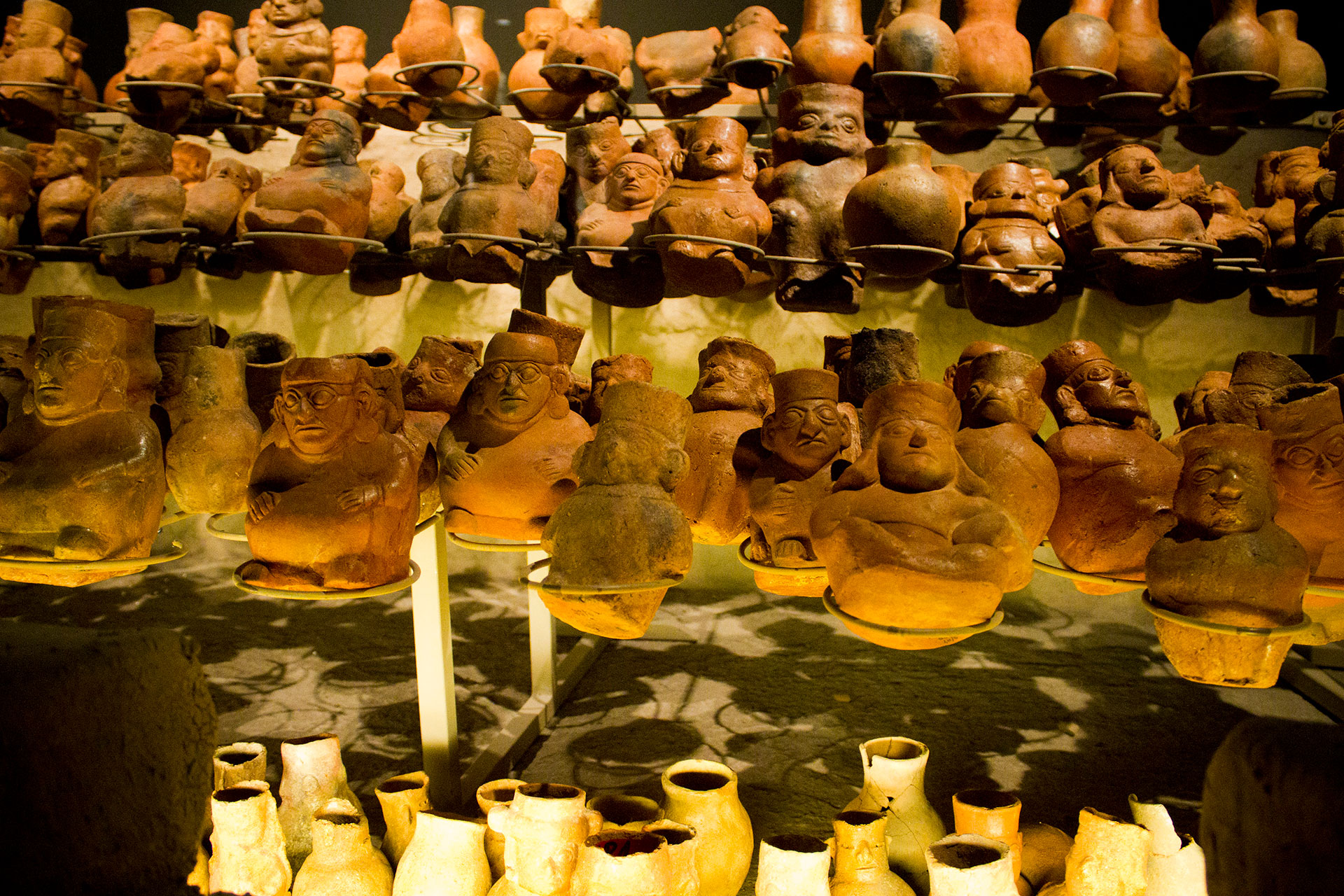
- Museo Nacional Sicán reveals the secrets of the Sicán culture, famous for its gold funerary masks and its sophisticated hydraulic and astronomical knowledge.
- The archaeological complex of Tucume, also known as the Valley of the Pyramids, surprises with more than 20 adobe pyramids that rise between the desert and the dry forest.
● Bosque de Pómac Historical Sanctuary combines archeology and nature, with pyramids of the Sicán culture and birds in its tropical dry forest.
● The Chaparri Private Conservation Area protects spectacled bears and guanacos, perfect for hiking and sighting.
● Laquipampa Wildlife Refuge offers trails between mountains, waterfalls and endangered species.
● Pimentel Beach awaits you with its famous pier, ideal for sunset strolls, its waves perfect for surfing.
● Playa Puerto Etén offers you a quieter atmosphere, with a traditional boardwalk, wide beaches to relax on and an ideal setting to unwind.
● Festivity of the Holy Cross of Chalpón de Motupe, in January and August, summons thousands of faithful in a pilgrimage full of faith and tradition.
● Traditional Andean gastronomy such as rice with duck prepared with chicha de jora, slow-cooked dried kid, causa ferreñafana and chinguirito, dried fish seasoned with chili and lemon.
● King Kong Festival in the city of Lambayeque, a sweet festival that celebrates the King Kong dessert, a large-sized alfajor, made with layers of cookie filled with blancmange, pineapple candy, figs and sometimes peanuts.
● The Lambayeque loche is a pumpkin native to the northern Peruvian coast, with denomination of origin and a unique flavor that enriches traditional dishes such as rice with duck, seco de cabrito and desserts.
Chiclayo to Trujillo (211 km / 4 h 14 min)
The tour continues in the city of Chiclayo, by private vehicle you can take the Panamericana Norte highway. You can also take a bus from the Terminal Terrestre of Chiclayo to Trujillo, the capital of the department of La Libertad. Remember to check the schedulesto better plan your experience. The route offers enchanting landscapes of coastal desert, dunes and agricultural valleys.
Trujillo invites you to visit:
● Historic center surrounded by colonial mansions with carved balconies, stone portals and the majestic Cathedral. Also, visit the Casa de la Emancipación, where the regional independence was signed, and the colonial art of the Templo El Carmen.
● Museums full of history such as the Museo de Arqueología de la Universidad Nacional de Trujillo, with Mochica and Chimú pieces, and the original Museo del Juguete.
● Moche or Mochica culture, great pre-Hispanic civilizations, in:
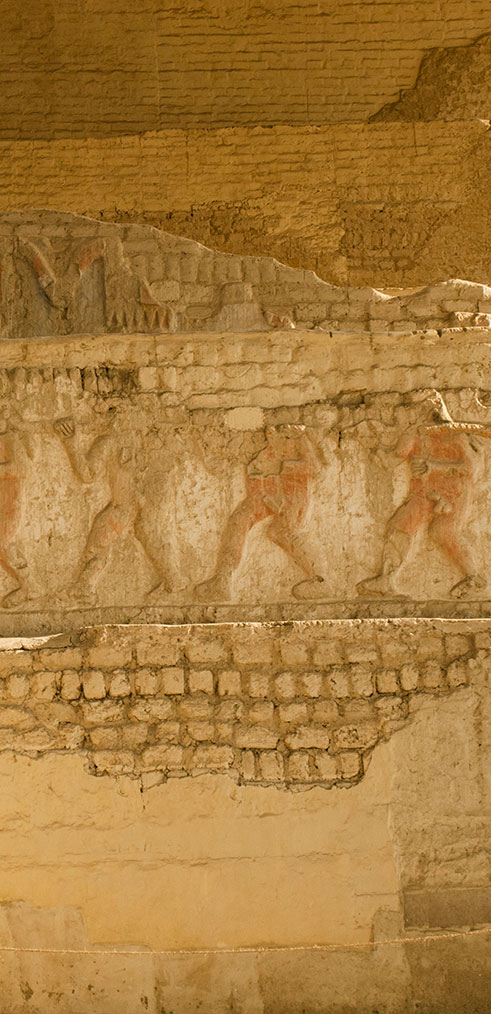
- Huacas del Sol y de la Luna archaeological complex reveals ceremonial and administrative temples with polychrome murals and monumental structures.
- Museo Huacas de Moche, next to the Huaca de la Luna, exhibits ceramics and ritual ornaments that reveal the mysteries of this civilization.
- El Brujo Archaeological Complex (Huaca Cao Viejo and Huaca Cortada) stands out for its adobe pyramid decorated with friezes and the tomb of the Señora de Cao, a mummified ruler who revolutionized pre-Columbian history.
● Chimu culture, great pre-Hispanic civilizations, in:
- Chan Chan, declared a World Heritage Site by UNESCO, the largest adobe city in pre-Hispanic America and capital of the Chimu Kingdom. Walk through its palaces, ceremonial squares and walls decorated with geometric and marine reliefs that reveal the worldview of this civilization.
- Chan Chan Site Museum, you can appreciate original objects such as ceramics, tools and ritual offerings.
● The Calipuy National Reserve, in Santiago de Chuco, protects extensive forests of Puya Raimondi and guanacos in the wild, ideal for hiking and photography.
● Waters Thermalis Eden hot springs awaits you with its warm pools of magnesium, sulfur, calcium, ideal for health and wellness, surrounded by a natural paradise that will leave you breathless.
● El Cañoncillo Natural Forest with trails among carob trees, bird watching such as the chisco, ATV rides and seasonal lagoons.
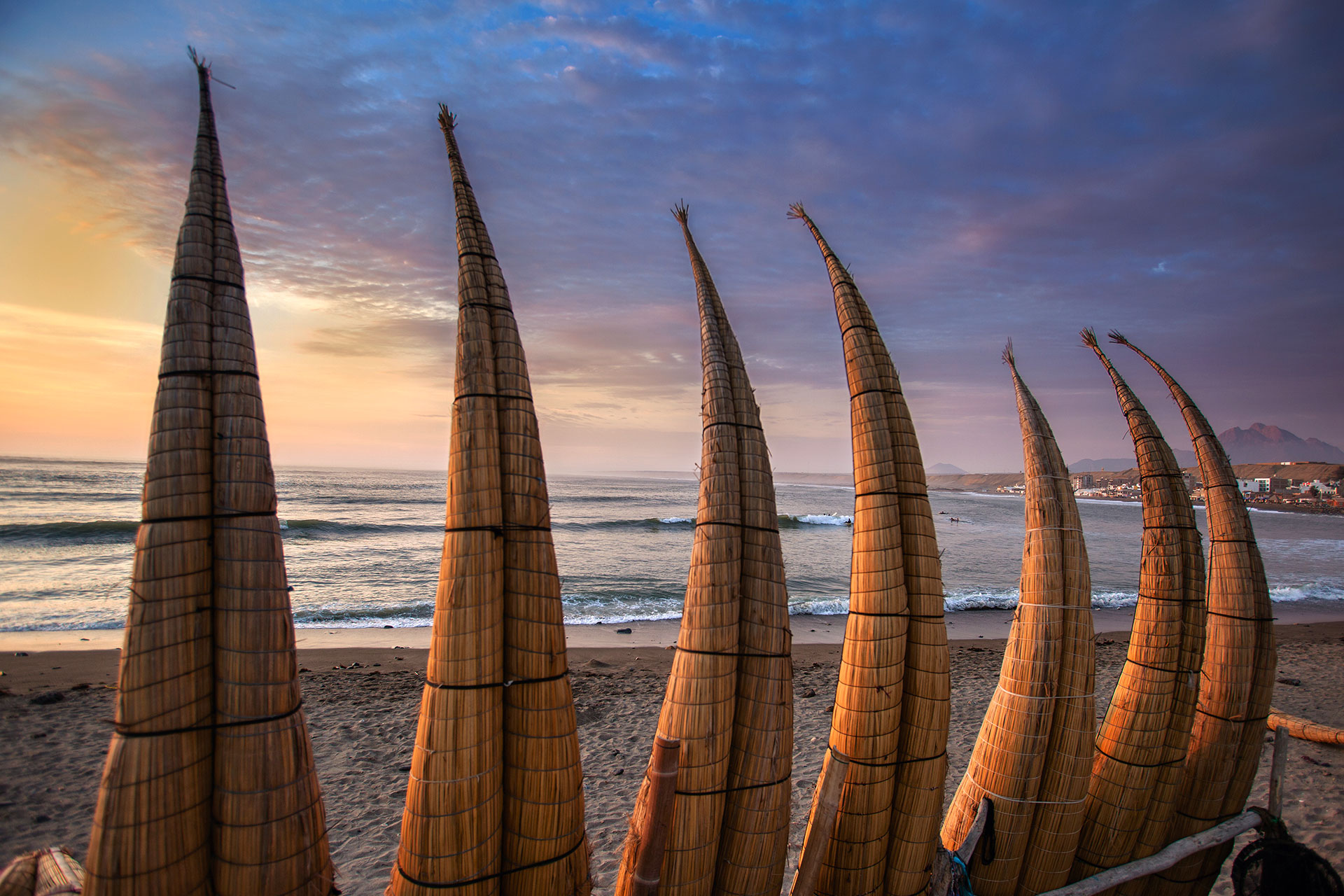
● Huanchaco beach with the traditional caballitos de totora and enjoy its perfect waves for surfing.
● Playa Puerto Malabrigo or Chicama, attracts surfers from all over the world with the longest left wave on the planet, ideal for the more adventurous.
● Pacasmayo Beach, ideal for windsurfing, kitesurfing or just relaxing in front of the sea.
● International Marinera Festival, in January, where the elegance of this Peruvian dance fills an entire city with pride.
● Traditional cuisine such as shambar, which is a thick soup of vegetables and meat, ceviche norteño with a lot of spice. And the fried trujillano completes the feast with pork, mote and zarza criolla.
Road Highlights
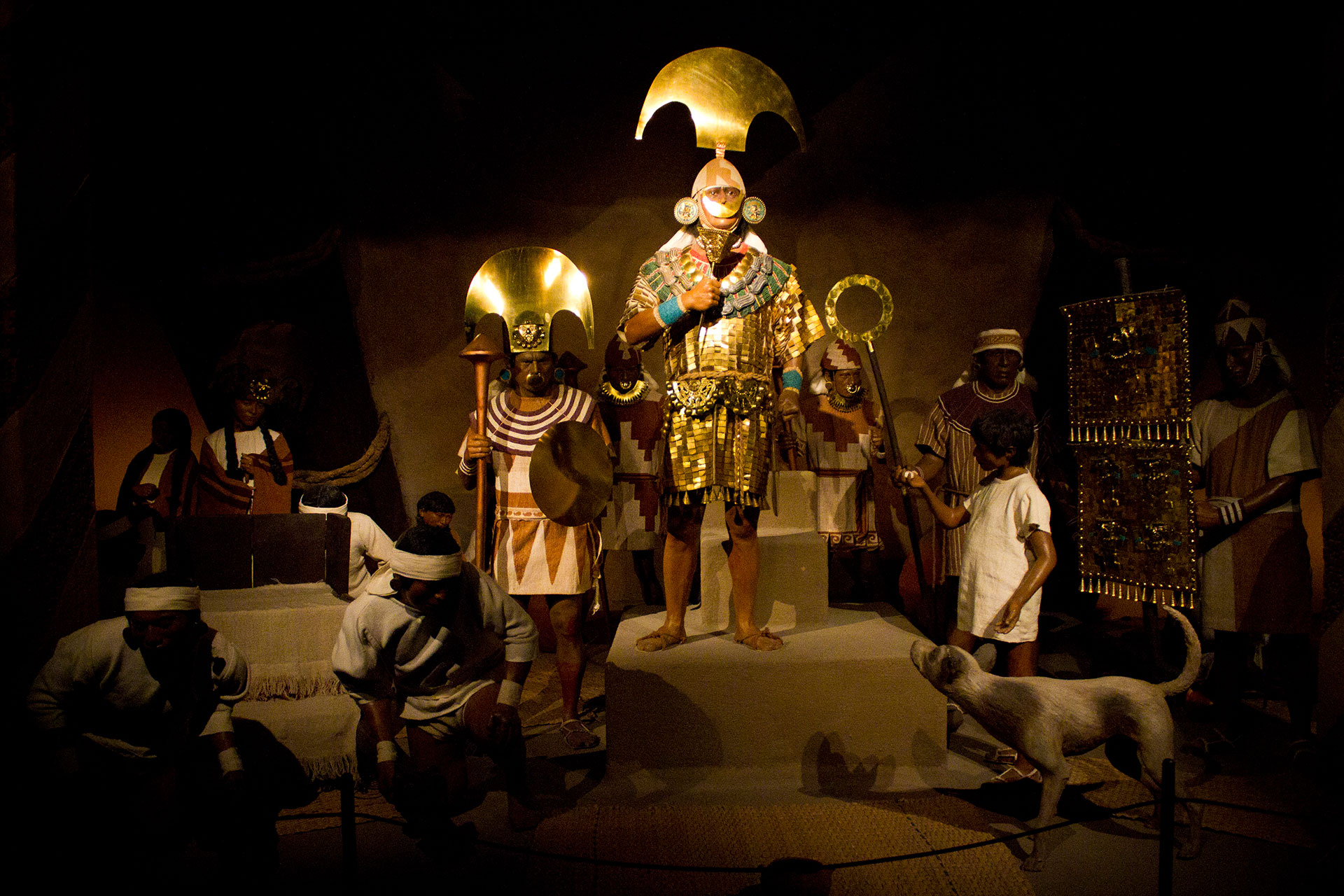
SIPAN ROYAL TOMBS MUSEUM
In Chiclayo, considered to be one of the most important museums in Latin America, inholds the archaeological discovery of the Lord of Sipan, a world landmark comparable to the tomb of Tutankhamen.
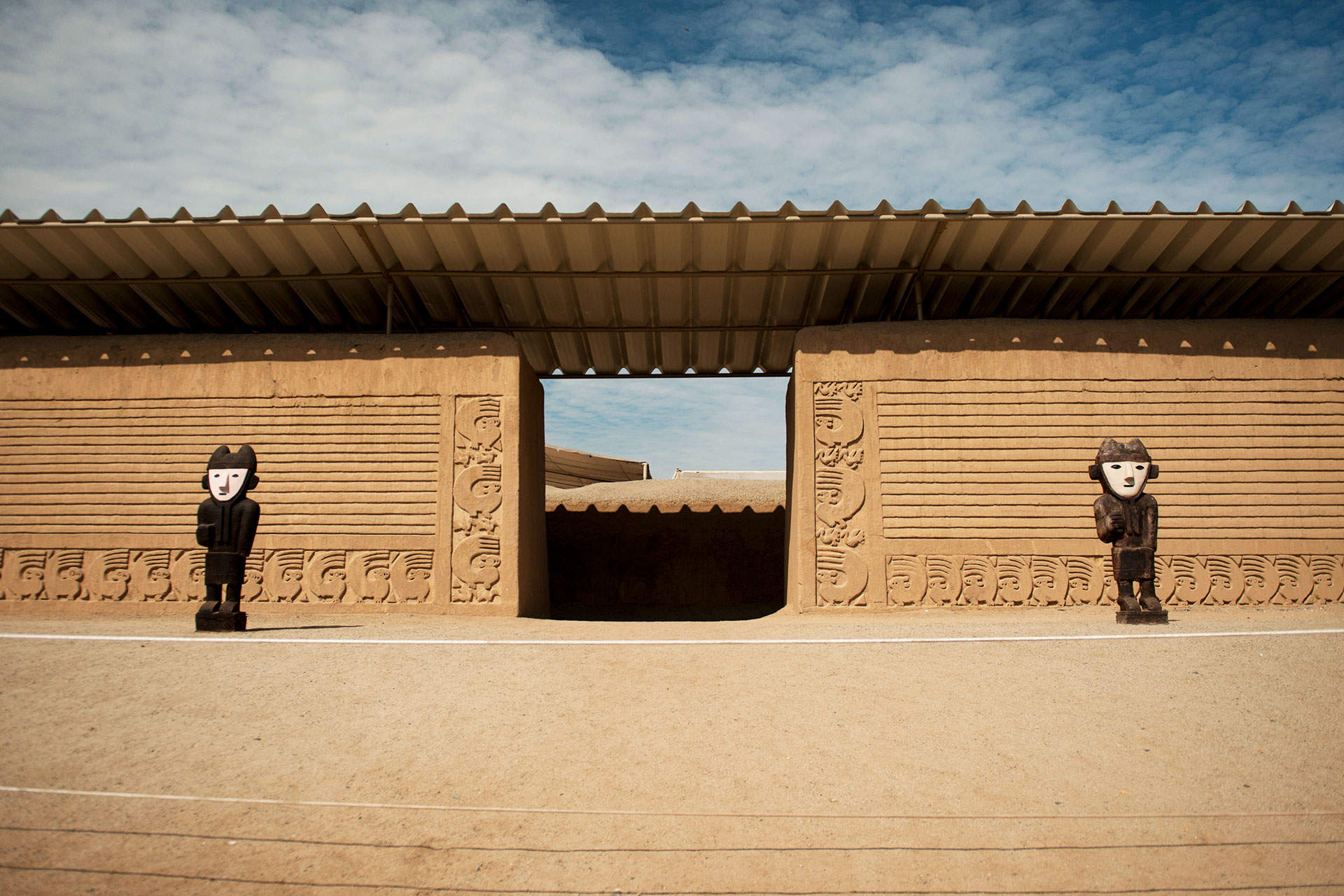
CHAN CHAN CITADEL
In Trujillo, A UNESCO World Heritage Site, it is the largest adobe city in pre-Hispanic America. It offers a unique experience of monumental architecture and Chimú cosmovision.

ARCHAEOLOGICAL COMPLEX HUACAS DEL SOL Y DE LA LUNA (HUACAS OF THE SUN AND THE MOON)
In Trujillo,is a ceremonial site of the Mochica culture with structures decorated with polychrome murals and evidence of sophisticated religious practices. Its proximity to the Huacas de Moche Museum enhances the experience.
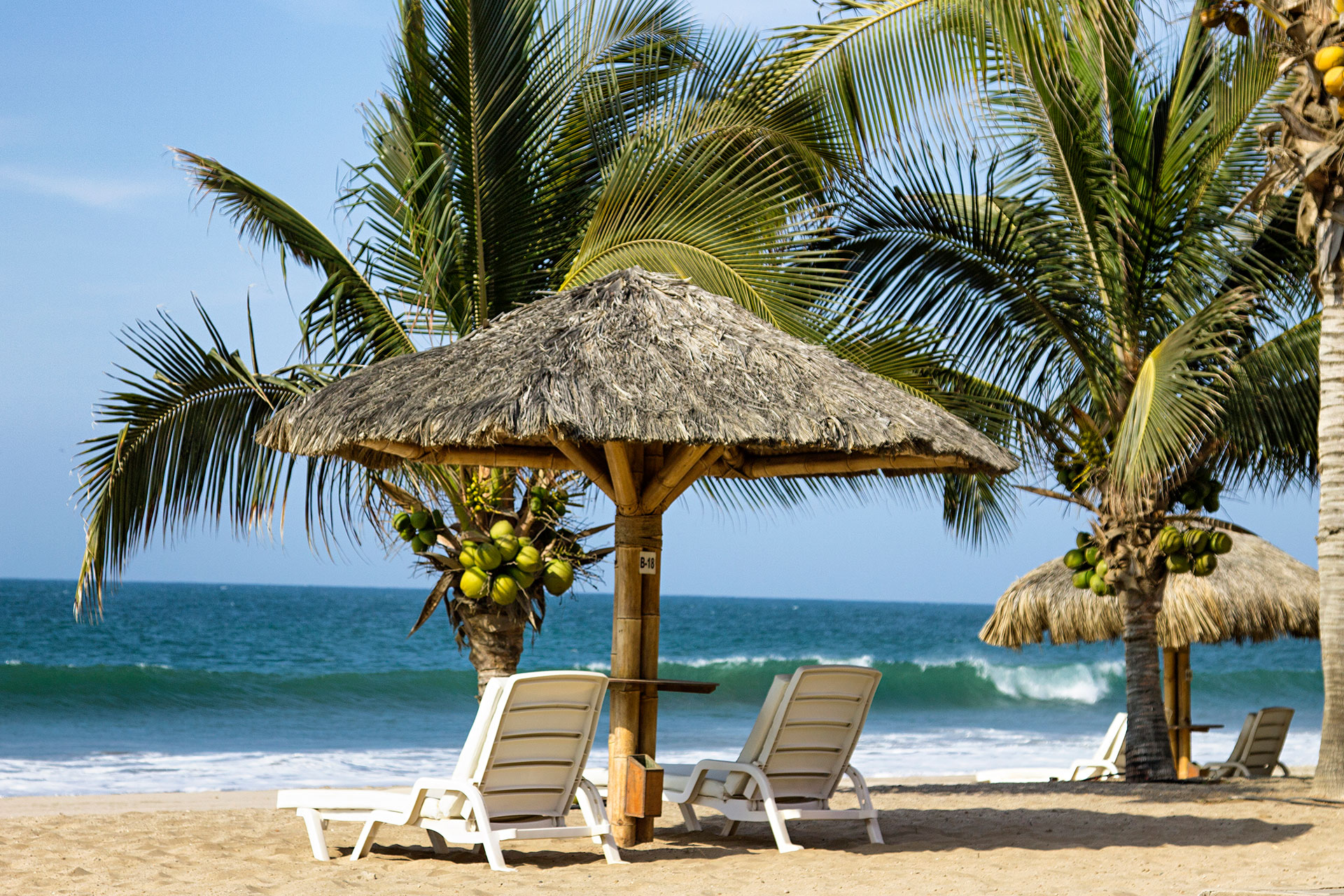
BEACHES OF TUMBES
In Tumbes, you will find wonderful beaches such as Salt Point, offers warm, calm waters ideal for swimming and whale watching peoples from July in October. Zorritos is ideal for surfing and relaxation. Punta Mero stands out for its natural beauty and crystal clear waters, perfect for snorkeling.
Huaca Cao Viejo of the Archaeological Complex El Brujo
PHOTO: PROMPERÚ
Chan Chan Citadel
PHOTO: PROMPERÚ
Huaca de la Luna
PHOTO: PROMPERÚ
Lagoon in El Cañoncillo Natural Forest Private Conservation Area
PHOTO: PROMPERÚ
Paseo de las Musas in the city of Chiclayo
PHOTO: PROMPERÚ
Millennial Carob Tree of the Bosque de Pomac Historic Sanctuary
PHOTO: PROMPERÚ
Túcume Archaeological Complex
PHOTO: PROMPERÚ
Huaca Rajada Archaeological Complex
PHOTO: PROMPERÚ
Representation of a tomb of the Sicán culture at the Sicán National Museum
PHOTO: PROMPERÚ
Punta Sal Beach
PHOTO: PROMPERÚ
Tumbes mangrove sanctuary
PHOTO: PROMPERÚ
Fish ceviche
PHOTO: PROMPERÚ
Chaufa rice with seafood
PHOTO: PROMPERÚ
Loche Squash
PHOTO: MINCETUR
The best adventure
 Spanish
  English
  Arabic
  Chinese