 Skip to content


Discover the magical
Cundiboyacense Highlands
Connects historical, natural and cultural essence
Explore the Cundiboyacense Trail, a journey that combines history, culture and nature in the departments of Cundinamarca and Boyaca. Start in Bogota, the vibrant capital city of Colombia, Visit the charming neighborhood of La Candelaria and admire treasures in the Gold Museum, guardian of the Muisca legacy. Continue to Zipaquirá to marvel at the imposing Salt Cathedral and its subway architecture. Discover the mythical Laguna de Guatavita, heart of the El Dorado legend, and advance through Andean landscapes to Villa de Leyva and Tunja. In Paipa, you can taste its cheese with the denomination of origin, iLikewise you can enjoy its thermal waters, which are medicinal. TAlso visit the Tota Lagoon, at Sogamoso go to the Temple to the Sun and end in front of the majestic snow-capped peaks of the imposing The Cocuy. Between moorlands, local flavors and adventure sports, this trail invites you to live an authentic Andean experience.
Temperature
Ranges from 0° C to 24° C
Weather
● Cold
Altitude between 2,100 and 4,800 meters above sea level.
● Dry season: December to March and July to August, high visitor season.
● Rainy season: April to June and September to November, average visitor season.

How to get there?
Find the best route to start your experience
By Air
Access this road through the Luis Carlos Galán Sarmiento El Dorado International Airport in Bogotá, department of Cundinamarca, Colombia's main air entry point with extensive national and international connectivity. From there, you can travel by land to the main tourist destinations in the departments of Cundinamarca and Boyacá.
Overland
This road has land connectivity through main roads such as the Troncal Central del Norte (Route 55), which facilitates access from Bogotá to various municipalities in Cundinamarca and Boyacá.
Terrestrial Tour
For the tour, you can choose to take a bus from the main terminals, rent a private car or hire organized tours. If you choose to travel by bus, remember review schedules and the routes to better plan your experience. The route offers views of agricultural valleys and green mountains that look like something out of a painting.
Zipaquira
Sesquilé
Villa de Leyva

Paipa
Sogamoso
El Cocuy
Terrestrial Tour
For the tour, you can choose to take a bus from the main terminals, rent a private car or hire organized tours. If you choose to travel by bus, remember review schedules and the routes to better plan your experience. The route offers views of agricultural valleys and green mountains that look like something out of a painting.
Starts in Bogota
In Bogota let yourself be surprised by:
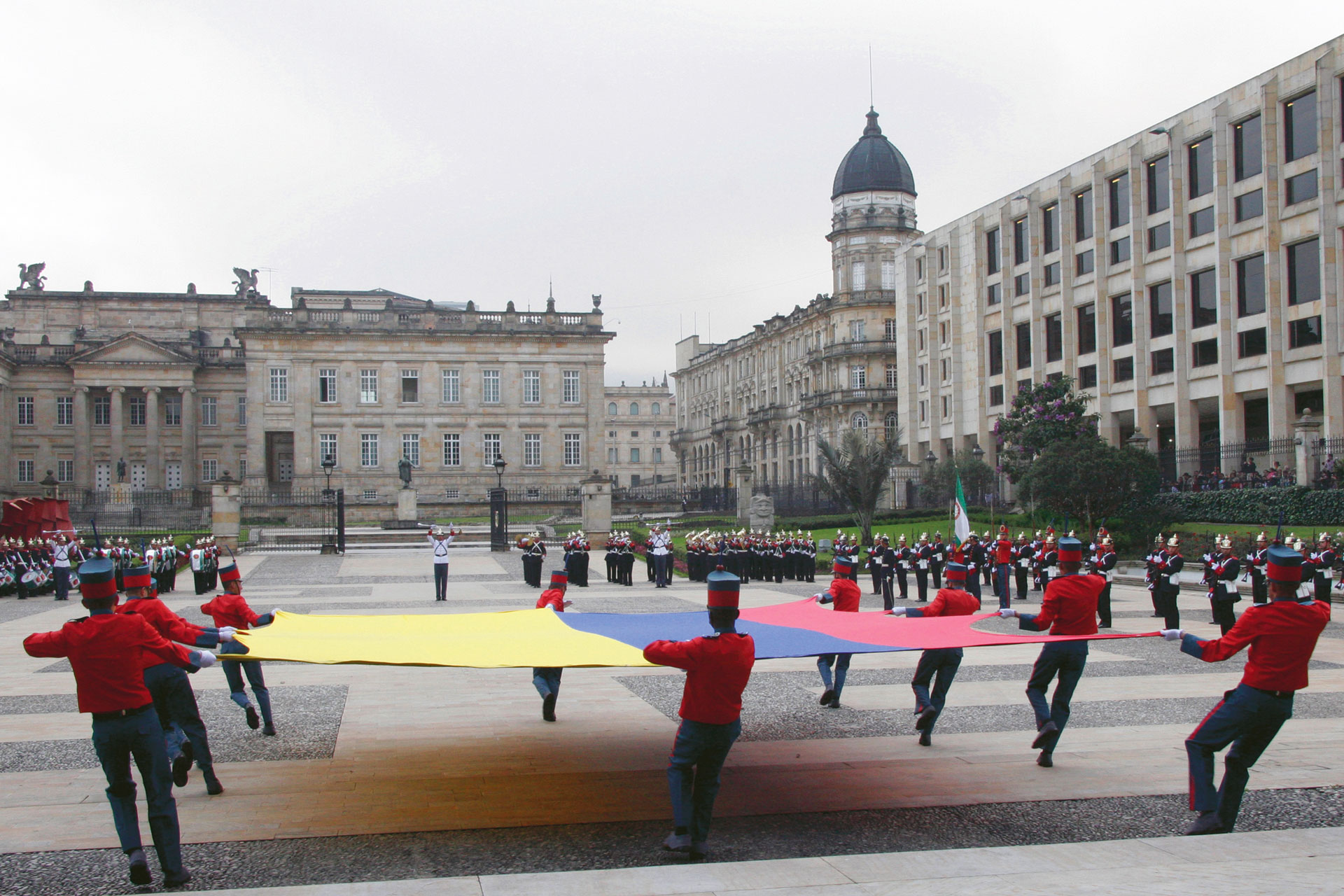
● The emblematic neighborhood peoples from La Candelaria, located in the center of Bogotá. Start your tour at the vibrant Plaza de Bolivar, surrounded by jewels of architecture like the Palacio Liévano, seat of the Mayor's Office with its elegant façade in a French Renaissance style; The majestic Catedral Primada, religious icon of the city and the Palace of Justicein peoples from great historical significance.
● World-class museums like the Gold Museum, part of the must-see of the Ruta de la Leyenda El Dorado, it contains the largest collection of pre-Hispanic jewelry, including the Muisca balsa, a ceremonial offering representing the investiture ritual of the Muisca cacique at the Guatavita Lagoon. The Casa de la Moneda, where numismatic history comes to life. The Casa del Marqués de San Jorge Archaeological Museum, with unique pre-Columbian artifacts. The Chicha Museum, which preserves the tradition of the ancestral Muisca beverage; and the Botero Museum, with the unmistakable works of the generous volume of the paintorand Colombian sculptor.
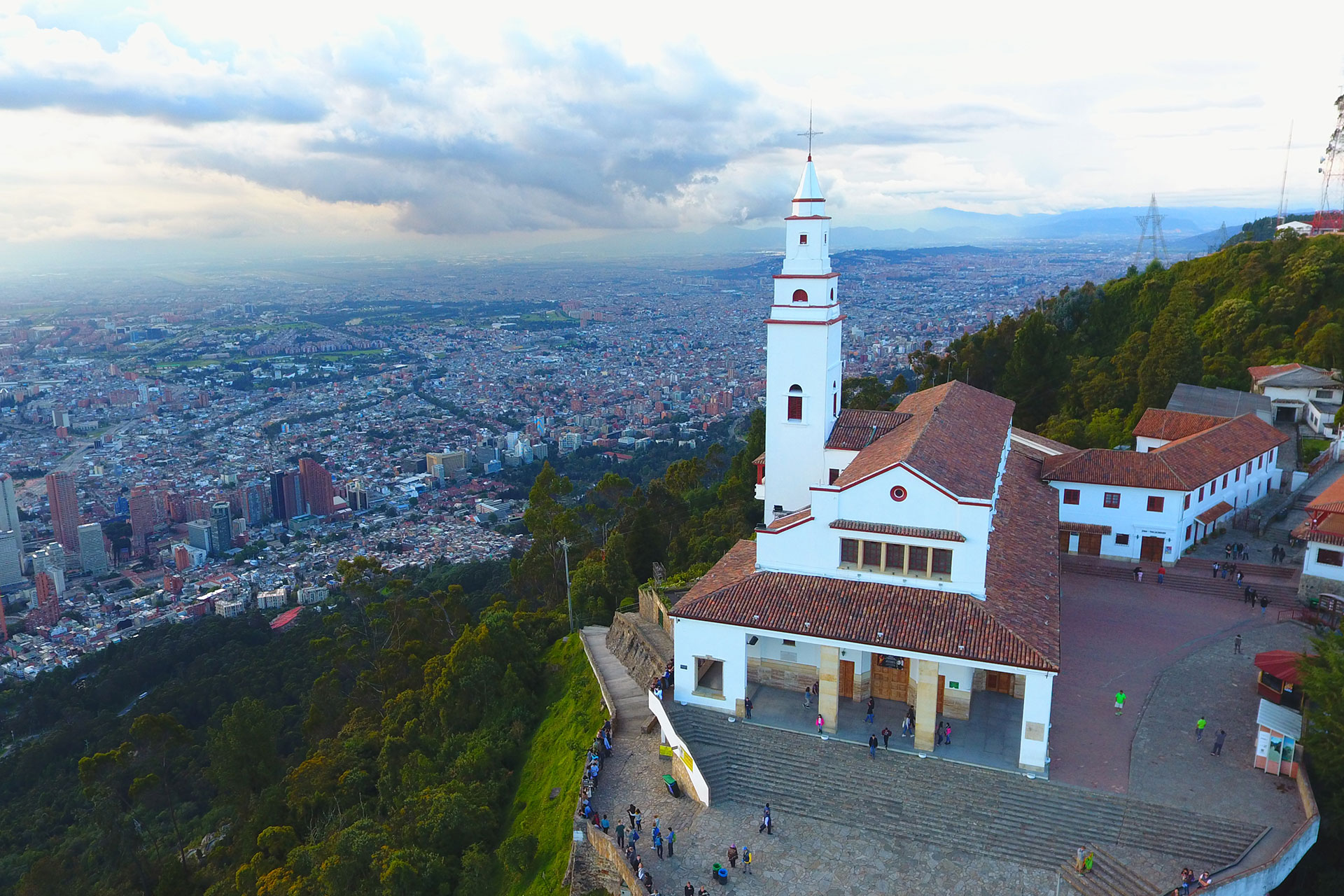
● The Basilica Santuario del Señor Caído de Monserrate can be climbed on foot if you are in good physical condition and are accustomed to the altitude, through a path that is enabled in the mornings. The recommendation is to climb by cable car or funicular and you will be able to enjoy a panoramic view of Bogotá.
● The Chicha, Life and Joy Festival, cultural heritage of Colombia, is a celebration that pays tribute to the ancestral traditions of the Andean peoples which takes place in October. Enjoy artisanal chicha, afermented corn-based drink, traditional music and peasant knowledge.
● Traditional gastronomy: as unique as the ajiaco, thick soup with three types of potatoes, chicken and guasca plant, ideal for cold weather. The fritanga compposed by meats, chorizo, creole potatoes and plantains in a traditional feast. The sobrebarriga, beef in creole sauce melts in your mouth with its homemade dressing. And for a sweet craving, don't miss the cuajada con melao made from milk with panela honey.
Near Bogotá:
● Gz hiking in thel Chingaza National Natural Park with Andean moorlands, lagoons, and species such as the spectacled bear. In addition, you can make wildlife observation and photography in unique landscapes. Remember to hire an authorized guide, as it is a requirement for admission. The Chingaza Lagoon, is part of the El Dorado Legend Route, considered by the Muiscas as the mother of all natural temples, where they practiced healing rituals.
● The Chicaque Natural Park invites you to explore more than 20 kilometers ecological trails, bird watching, ziplining, arborism, horseback riding and viewpoints such as the famous Pico del Águila with spectacular panoramic views.
● Nimaima and Útica are destinations idealis for adrenaline lovers, where you can enjoy you can rafting, torrentism, canopy, We also offer ecological hikes and other activities in the Negro River and a diversity of waterfalls.
● Suesca, near Sesquilé, known for its imposing rocks, it is perfect for climbing, rappelling and hiking through the Cañón de las Lechuzas.
Bogotá to Zipaquirá, Cundinamarca (50 km / 60 min)
From Bogotá by private vehicle you can take the highway 55 or take a bus from Terminal Salitre or Terminal Norte to Zipaquirá. You can also reach in the Savannah Tourist Train.
In Zipaquirá enjoy:
● Thehistorical center, declared a National Asset of Cultural Interest, preserves its history in colonial plazas and traditional architecture that reflects its cultural heritage.
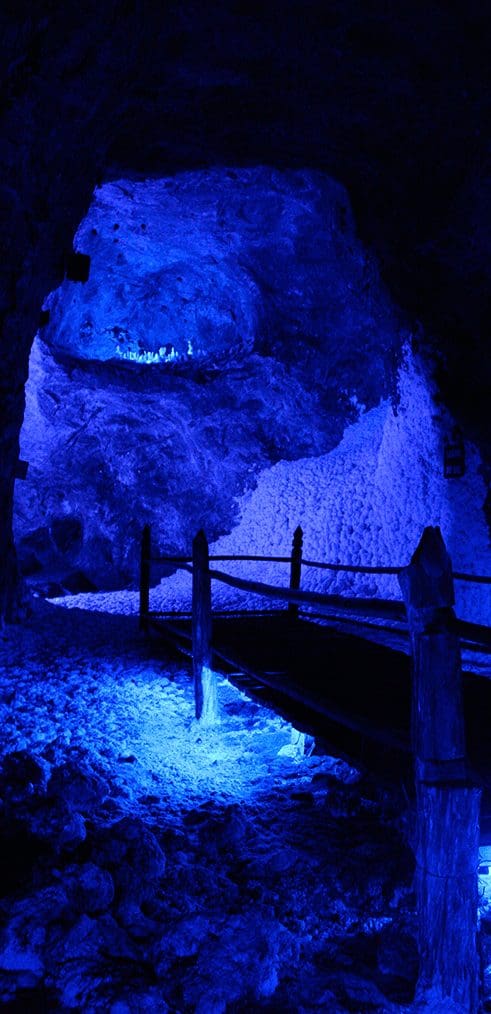
● The salt catedral a majesticunderground temple built in salt mines, combines religious architecture and art, considered a wonder of Colombia. It is recommended that you wear comfortable shoes, as the route includes slopes.
● TheZipaquirá Railway Station, National Monument of 1927 ideal for photographs, connects with the tourist train Bogotá-Zipaquirá.
● The Nemocón Salt Mine, very close to Zipaquirá, offers you a journey into the depths with its famous brine mirrors. Experience the legacy of salt extraction.
Zipaquirá to Sesquilé - Guatavita (47 km/ 50 min)
The route continues from Zipaquirá, department of Cundinamarca, where you can take the National Route 45A and then join the National Route 55. In public transportation it is important to check the best option, If you are going to return to Bogota and take a bus from there, you will probably have to return to Bogota and take a bus from there.
At Sesquilé and Guatavita visit:
● Walk the streets of Guatavitin, a beautiful town with white streets and beautiful views of the reservoir peoples from Tominé.
● The lojana Guatavita Lagoon, central stage of the El Dorado Legend Route, where the new cacique, covered with gold dust, sailed on a raft and offered the gods gold, emeralds and precious stones as a sacred tribute of initiation.
● Muisca Cabildo of Sesquilé, part of the Route of the Legend of El Dorado, is a community that keeps its traditions, customs and knowledge alive. It allows tourist approaches focused on the living Muisca culture.
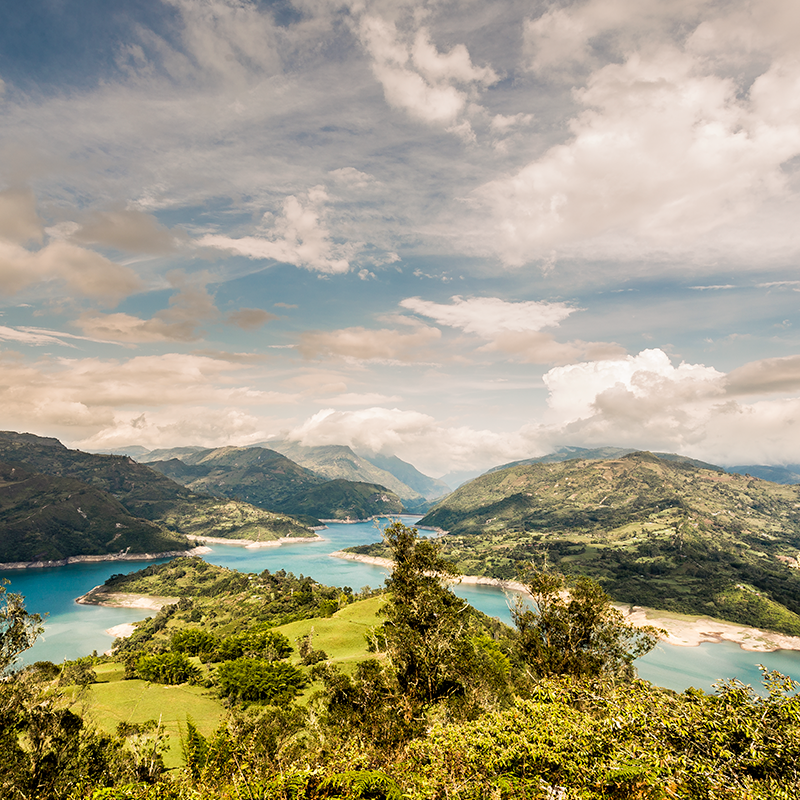
● The Embalse de Tominé offers water activities such as sailing, kayak, jet ski and sport fishing, surrounded by unique landscapes that invite adventure.
Sesquilé to Villa de Leyva (111 km/ 2 h)
The journey continues to the department of Boyaca, with a private vehicle you can take the highway 55 and then taker the road 60. You will be able to stop first at Tunja or go directly to Villa de Leyva and then to visit Tunja. You can also take a bus from the bus stop entrance to Sesquilé. Remember to check schedules and the routes to better plan your experience.
In Villa de Leyva marvel at:
● Its colonial style architecture that accounts for the colonization process and reveals the commercial, and cultural links between Muiscas and Spaniards. RWalk lin Cobblestone Plaza Mayor one of the largest in the Americas of the South, where the Church of Our Lady of the Rosary and the House of the First Congress stand out.
● The Antonio Nariño House Museum and the Cloister of San Agustín, a colonial religious building that houses the biological collections of the Alexander von Humboldt Institute. The lojana Terracotta House, A unique construction made entirely of sun-baked clay, this sculpture-house combines art, architecture and sustainability in one place.
● TheIguaque Flora and Fauna Sanctuary, near Villa de Leyva, a sacred place for the Muisca and part of the Ruta de la Leyenda El Dorado,its main attraction, the Iguaque Lagoon, a site of unparalleled beauty. Walk along its trails among frailejones, orchids and cloud forests, and observe deer and foxes in their natural habitat.
● Ta Fiesta de las Luces, in December, is a nighttime spectacle of lanterns, candles and fireworks that dazzles locals and visitors alike. Traditional gastronomy: as traditional as the boyacense stew, a hearty dish with various meats, potatoes, yucca and corn on the cob, that you will love from the first bite.
Villa de Leyva to Tunja, Boyacá (38 km/ 60 min)
The route continues from Villa de Leyva, department of Boyaca, with a private vehicle you can take the National Route 60 or you can take a bus from the Terminal de Villa de Leyva to Tunja, capital of the department of Boyacá.
In Tunja enjoy:
● The historic center, declared a National Monument, one of the best preserved in the country. Discover the Plaza de Bolívar, the imposing Cathedral Basilica Metropolitana Santiago de Tunja, the Church of Nuestra Señora del Milagro del Topo, Templo Santo Domingo and Museo de Santa Clara la Real. The Cojines Zaque, mythical place, part of the Route of the Legend of El Dorado., a complex solar worship center, this site has a strategic astronomical layout, was a ceremonial center and served as an observatory and sacrificial altar. ● Coffee farms where you learn about the coffee process step by step, walk among coffee plantations and enjoy a cup of the best coffee in the world.estival International de la Cultura Campesina takes place in August and offers a variety of concerts, theater, dance, craft fairs, traditional cuisine and cultural activities that highlight the identity and richness of the Boyacan countryside.
● Traditional gastronomy: that you will love as the mazamorra chiquita, a thick soup of corn, potatoes, lima beans and beef, a symbol of Andean identity. Delight yourself with the mute, prepared with pork and grains. Don't miss the rib broth, perfect for the cold weather. And for dessert, savor the brevas (a kind of fruit) with arequipe, which are figs with dulce de leche. Tunja invites you to savor its tradition.
● Unique handicrafts such as the ruana, made in sheep wool, reflects the Andean identity and climate. Its open and comfortable design is ideal for cold areas.
● Handicrafts in Ráquira, close to Tunja, is the artisan town of Boyacá, its handmade weavings and ceramics, which preserve ancestral techniques, stand out.
Tunja to Paipa (45 km/50 min)
The journey continues from Tunja, capital of the department of Boyacá, with a private vehicle you can take the National Route 55 or you can take a bus from the Juana Velasco de Gallo Terrestrial Transportation Terminal in Tunja to Paipa, department of Boyaca.
In Paipa delight yourself with:
● Recognized thermal waters of volcanic origin, ideal to relax in pools and take advantage of your stay in this tourist capital of Boyacá..
● The National Festival of the Ruana and the Pañolón, held in May, is a joyful event that exalts peasant traditions with parades, carranguera music and lots of folklore.
● Paipa cheese is one of the most representative flavors of Boyacá and has a designation of origin thanks to its quality and tradition. Along the Paipa Cheese Tourist Route, you cans learn how this product is made, participate in workshops with local producers, and enjoy the tastings while walking through rural landscapes full of charm.
Paipa to Sogamoso (30 km / 40 min)
The journey continues from Paipa, department of Boyacá, with a private vehicle you can take National Route 55 that connects with the via 62, also known as the via Paipa-Sogamoso. You can make a stop in Duitama, if you wish to visit the Pueblito Boyacense, Also you can take a bus from the Paipa Transportation Terminal to Sogamoso, Department of Boyacá.
In Sogamoso discover:
● The Eliécer Silva Celis Archaeological Museum, legacy of the Muisca culture. Visit ancient tombs, traditional dwellings and a garden with plants traditionally used by the Muisca people in the cures, food and rituals. Its main attraction is the Temple of the Sun, which is part of the Legend Route. EEl Dorado, was reconstructed and today offers an authentic worldview experience. muisca.
● Tota Lagoon, near Sogamoso, is the Colombia's largest lake and second largest navigable lake in Latin America located at a high altitude (3,015 meters above sea level). Laguna surprises with its white beaches, and cold waters.
● Lagoon of Siscunsí, near Sogamoso, surrounded by frailejones, it is ideal for hiking and camping in the middle of nature.
● The little town Boyacence, in Duitama, before reaching Sogamoso, captivates with the representation of the main towns in Boyaca.
Sogamoso to El Cocuy, Boyacá (210 km/ 6 h)
The journey continues from Sogamoso, department of Boyacá, with private vehicle you can take the 62 that connects to the National Route 55 to El Cocuy, department of Boyaca. You can also take a bus at the Sogamoso Terminal in the direction of El Cocuy.
In El Cocuy let yourself be surprised by:
● The Natural National Park EEl Cocuy, captivates with more than 18 snow-capped peaks, impressive glaciers and crystalline lagoons that offer unique landscapes. Visitors can explore three trails accompanied by authorized guides, guaranteeing a safe and enriching experience.
Road Highlights
LA CANDELARIA, A HISTORIC NEIGHBORHOOD IN BOGOTÁ
In Cundinamarca,discover the historic heart of Bogota at the Plaza de Bolivar, surrounded by the Liévano Palace, the Primada Cathedral and the San Carlos Palace. Visit iconic museums such as the Gold Museum, Botero and the Casa de la Moneda.

ZIPAQUIRÁ AND NEMOCÓN, SALT TRADITION
In Cundinamarca, visit the imposing Zipaquira Salt Cathedral, a unique subway jewel in the world, and the Nemocon Salt Mine, where amazing formations and tunnels reveal Colombia's mining history.
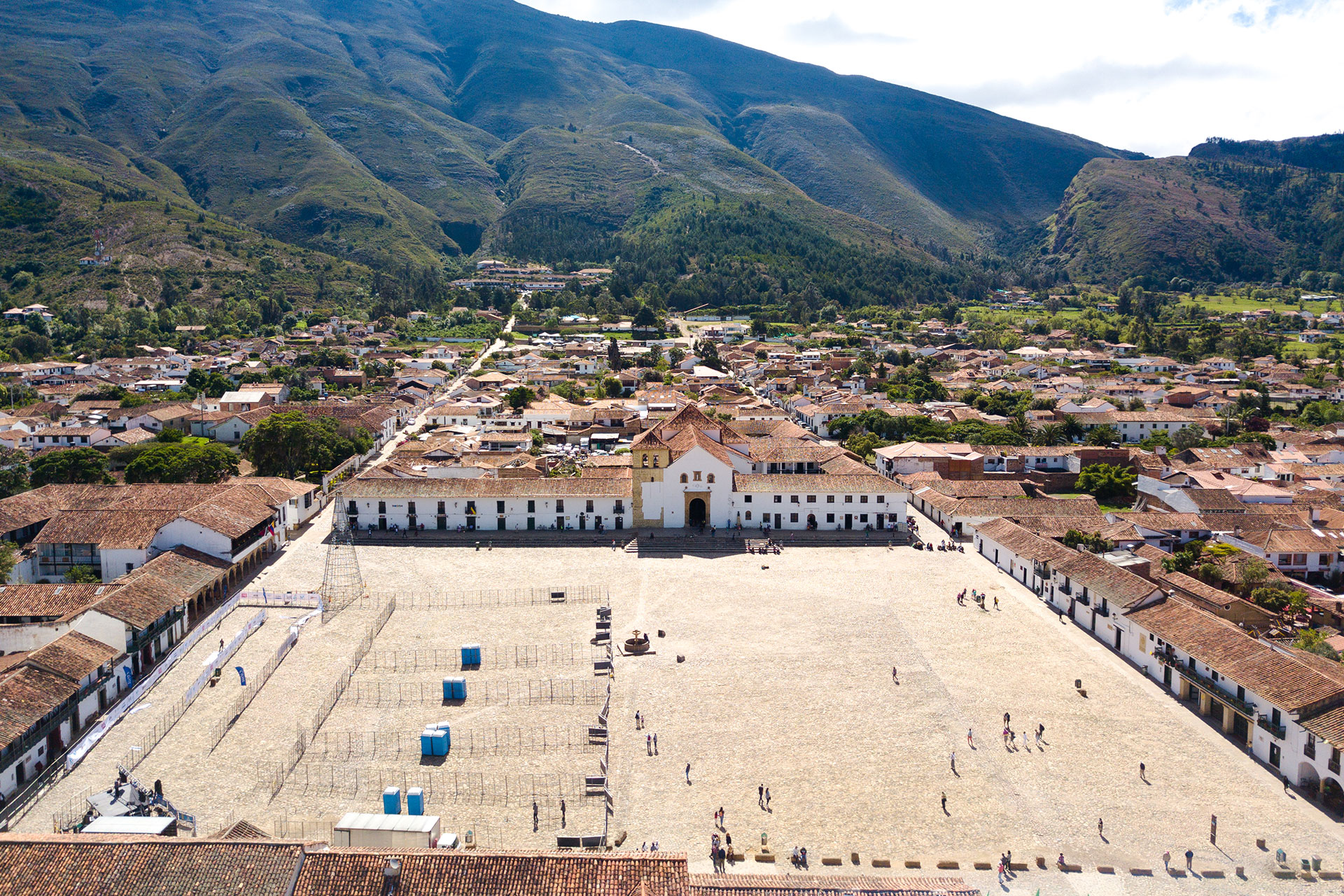
VILLA DE LEYVA, COLONIAL HERITAGE
In Boyacá, Villa de Leyva captivates you with its cobblestone square, one of the largest in South America, the Church of the Rosary and the House of the First Congress. Discover the Antonio Nariño House Museum and the Cloister of San Agustin, home of the Humboldt Institute.

SIERRA NEVADA DEL COCUY NATIONAL NATURAL PARK
In Boyacá, The Sierra Nevada del Cocuy dazzles with more than 18 snow-capped peaks, glaciers and lagoons. Hike three official trails with an authorized guide and live an adventure in one of the most impressive landscapes in Colombia.
Panoramic view of Bogotá, Bogotá D.C.
PHOTOGRAPH: Peter J. Liévano - Vice Ministry of Tourism of Colombia
Bogota Gold Museum
PHOTO: Carmen Villegas, Vice-Ministry of Tourism of Colombia
Villa de Leyva Plaza
PHOTO: Carmen Villegas - ProColombia
El Cocuy National Natural Park, Boyacá
PHOTOGRAPH: Jaime Dueñas - Vice Ministry of Tourism of Colombia
Ajiaco
PHOTO: ProColombia
The best adventure
 Spanish
  English
  Arabic
  Chinese