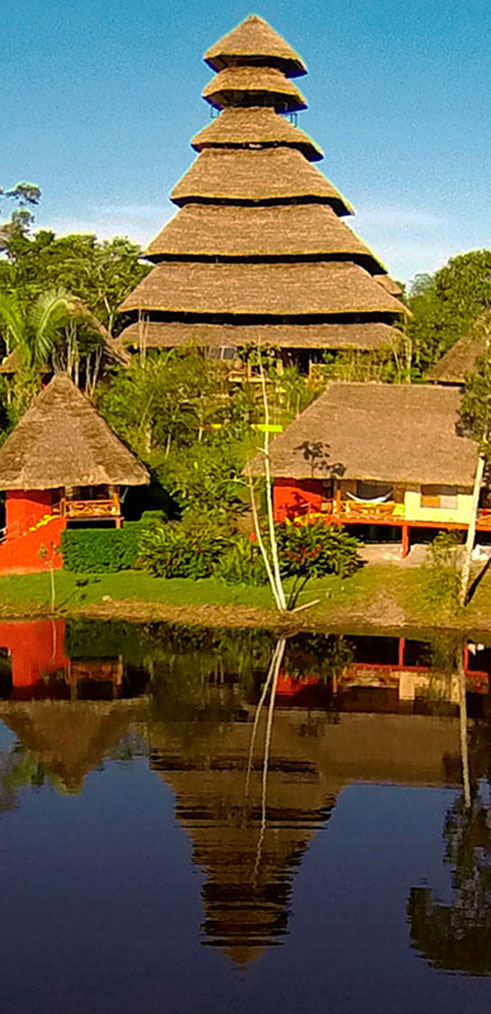
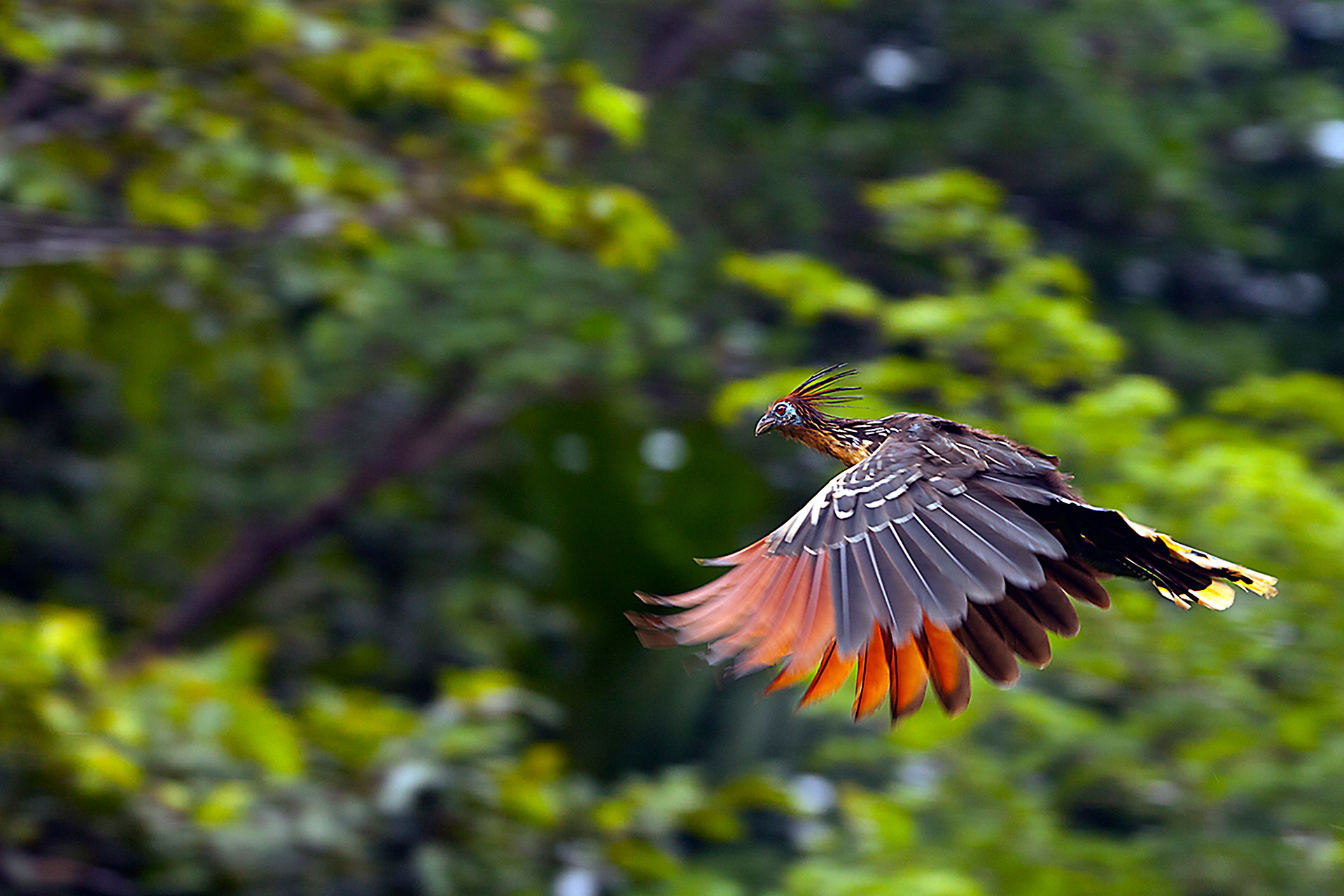
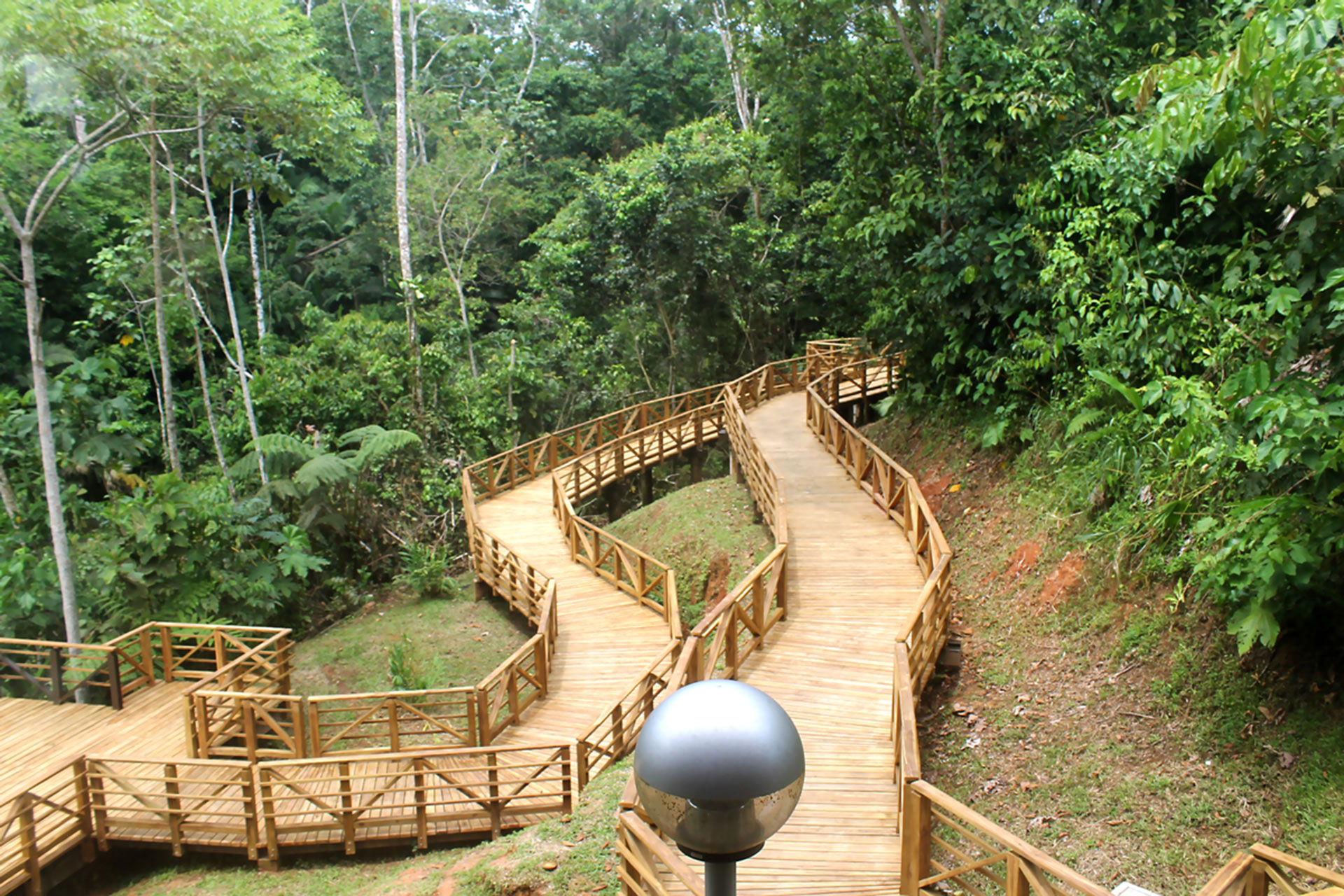
Explore the Amazon Trail and Reserves, a route that connects the provinces of Sucumbíos and Orellana, where the Ecuadorian Amazon reveals all its natural and cultural richness. At Sucumbíos, The Cuyabeno Reserve (RPF Cuyabeno) and the Limoncocha Biological Reserve, visit the waterfalls of Gonzalo Pizarro, relax in Lago Agrio and experience the ancestral Cofán culture, Kichwa, The company is a member of the Siona, Secoya, Siona and Shuar, among other nationalities. At Orellana, the Coca, Napo and Napo rivers, and Payamino, Visit the MACCO and venture into the Yasuní National Park, one of the most biodiverse on the planet. This trail invites you to discover the living jungle of Ecuador.
Temperature
Ranges from 21°C to 29°C
Weather
● Tropical humid
Altitude between 180 and 1,300 meters above sea level.
● Frequent rains throughout the year; the periods December-February and July-August tend to have better tourist operations depending on the area.
How to get there?
Find the best route to start your experience
By Air
Access the Amazon Trail and Reserves through two main gateways: Lago Agrio Airport (Nueva Loja, Sucumbíos) and Francisco de Orellana Airport (El Coca, Orellana), both with regular flights from Quito. From there, the route continues by land or river to reserves and communities.
Overland
This road has land connectivity through the E-45A Highway. This road connects the provinces of Sucumbíos and Orellana, allowing visitors to enjoy their tourist attractions.
Terrestrial Tour
For the tour you can choose to take a bus from the main terminals, rent a private vehicle or hire tours organized by travel agencies. If you decide to take public transportation, remember to check the schedules to better plan your experience.
For the tour you can choose to take a bus from the main terminals, rent a private vehicle or hire tours organized by travel agencies. If you decide to take public transportation, remember to check the schedules to better plan your experience.
Lago Agrio to El Coca (98 km / 2 h)
The tour starts in the city of Lago Agrio, the capital of the province of Sucumbíos, By private vehicle you can take the E-45A road or you can take a bus from the Lago Agrio bus terminal to the city of El Coca, capital of the province of Orellana. The route offers views of lush jungle and meandering rivers.
In Lago Agrio let yourself be surprised by:
● Cuyabeno Wildlife Production Reserve (RPF Cuyabeno), in Sucumbíos, covers more than 600,000 hectares of jungle, lagoons and rivers. It offers bird watching, pink dolphins, guided hikes and experiences with Amazonian indigenous communities.
● Limoncocha Biological Reserve with more than 4,000 hectares of jungle and Ramsar wetlands. Navigate its lagoons, hike trails and observe birds, caimans and wildlife in the middle of the Amazon.
● Ruta de las Cascadas takes you through 80 km of Andean-Amazonian landscapes with impressive waterfalls such as El Chingual and Las Ollas. Enjoy trekking, canyoning and living nature on every stretch of the trail.
● The canton of Gonzalo Pizarro, on the Water Route, invites you to visit natural springs, ancient petroglyphs, beaches of the Dué River and the rock formations of the Aguarico River in the middle of the Amazon jungle.
● Maloca del Parque Turístico Perla is an urban icon where the knowledge, dances and rituals of indigenous peoples converge, with living spaces for cultural presentations..
● Cultural Interpretation Center of Nueva Loja, offers exhibits of fossils, archaeological pieces, sculptures and paintings of native peoples.
● Carnival, in February, a colorful festival with comparsas, concerts and traditions that attracts thousands of tourists for its energy, lively culture and Amazonian hospitality.
● Chonta Festival, in April, honors the sacred fruit with dances, ancestral gastronomy and Cofán rituals.
● Káko Wiñae Festival or festival of rejuvenation, August, in Shushufindi highlights Kichwa art, music, identity and pride with vibrant cultural days.
● Unparalleled gastronomy such as maito is made with river fish, wrapped in bijao leaf and slow roasted. Palm heart ceviche mixes tender palm heart, onion, lemon and cilantro in a refreshing vegetable version. Chontacuro, an Amazonian beetle larva, is served charcoal-grilled, crispy on the outside and soft on the inside. Accompanied with fermented yucca chicha and guayusa, a traditional energy infusion.
● Amazonian handicrafts such as chaquira necklaces with seeds, chambira palm weavings, ceramics with ancestral designs and objects made of clay, fibers and balsa wood.
In El Coca enjoy:
Discover Yasuní National Park, a Biosphere Reserve and one of the most biodiverse places on the planet. Navigate lagoons, observe Amazonian wildlife such as the pygmy marmoset (Cebuella pygmaea) the smallest monkey in the world, birds of various kinds, reptiles, among others, and walk through vibrant forests full of unique life.
● Canton Loreto, very close to El Coca, offers adventure activities in its waterfalls and rivers, speleology in its caverns and community tourism.
● On the city's Malecon, on the banks of the Napo River, handicrafts of the three nationalities Kichwa, Shuar and Waorani are exhibited in picturesque “malocas”.
● MACCO, Archaeological Museum and Cultural Center of Orellana, houses more than 400 pieces of the Omagua culture, archaeological heritage of the Ecuadorian Amazon.
● Community-based tourism, connect with the Waorani, Kichwa and Shuar nationalities. Share their traditions, learn about their ancestral cuisine and discover their vision of the world in the middle of the jungle.
● Traditional gastronomy such as Uchumanka, Orellana's emblematic dish, a spicy soup of origin that uses chili, palm heart, white cocoa seeds, fish and yucca. Maito is made with river fish, wrapped in bijao leaves and slowly roasted. Drinks such as the traditional guayusa, chicha de yucca, chonta and morete are sold in plazas, markets and restaurants.
Original handicrafts such as weavings, jewelry, shigras, baskets, mokawas, all unique designs inspired by the rainforest. Visit community centers and local fairs to purchase unique souvenirs that support sustainable economies and connect with the soul of the rainforest.
Road Highlights
CUYABENO WILDLIFE PRODUCTION RESERVE (RPF CUYABENO)
In Sucumbios, one of the main nature destinations in Ecuador. Navigate among lagoons, observe pink dolphins, birds and caimans, and live experiences with local guides and indigenous communities.
YASUNÍ NATIONAL PARK
Orellana, declared a Biosphere Reserve, offers one of the highest concentrations of biodiversity on the planet. Walk through its lagoons and forests, observe unique fauna and learn about ancient cultures in the middle of the jungle.
WATERFALLS ROUTE
In the Andean-Amazonian transition, it connects on foot or by vehicle between waterfalls like El Chingual and Las Ollas. Ideal for trekking, canyoning and enjoy living mountain and jungle landscapes.
COMMUNITY-BASED TOURISM
Live authentic experiences with indigenous peoples such as Kichwa, Cofán, Cofán, Siona, Secoya, Waorani and Shuar. Participate in rituals, traditional cuisine, ancestral knowledge and visits to cultural centers. In both provinces, community-based tourism strengthens local identity and connects visitors with the soul of the Amazon.
Nueva Loja
PHOTO: Ministry of Tourism of Ecuador
Cuyabeno Wildlife Production Reserve (RPF Cuyabeno)


 Skip to content
 Spanish
  English